Can AI make a good SaaS explainer?
Yes, if your team can supply an accurate story, check every product claim and correct the output. Custom production becomes more useful when the film needs precise interface behaviour, a distinctive visual explanation or changes that must remain controllable. A screen recording may be the best option when the viewer simply needs to complete a task.
The choice is not really AI versus humans. It is how much judgement and editing control your project needs, and who will provide it. An agency can use AI badly. An internal team can make a very clear film with modest tools. Judge the finished explanation, not the production label.
Separate generated scenes, screen recordings and custom animation
An AI-generated scene, an AI-narrated screen recording and an AI-assisted custom animation are different products. Ask what is being generated. If the interface comes from a real capture but the narration is synthetic, the review problem is different from a scene in which the tool invents the interface itself.
For a task tutorial, capture the actual product in a safe demonstration account. For an idea that is invisible inside the interface, a diagram or custom motion sequence can help. For an early internal concept, a generated rough cut may be enough to discuss the direction. Do not buy an elaborate animation when an honest capture answers the question.
Try a five-shot test before committing to a full film
Take one difficult passage from the proposed script and make a short test using the approach you are considering. Use the same approved information for every option. This is a production decision exercise, not a scientific benchmark or a promise that one tool will win.
Include a recognisable user problem, an actual product action, the system response, an important limitation and the intended next step. Ask a product reviewer to check truthfulness and someone outside the team to explain what happened. If the sequence looks impressive but they describe a capability you do not have, it is not ready.
Now change one detail: a button label, a qualification or the order of two actions. Measure the effort required to make that correction without damaging the surrounding sequence. This small revision test tells you something a polished first render cannot: whether you will be able to maintain the film.
- Can the viewer identify who the product is for?
- Are labels, data and workflow order correct?
- Does the film distinguish automation from actions a person must take?
- Can a factual correction be made without recreating unrelated scenes?
- Can the team deliver captions, the required formats and an editable handover?
Example: explaining invoice routing without inventing features
Illustrative scenario, not a client result: a software team wants to show an invoice moving from an inbox to an approval queue. A generic animation shows an invoice disappearing into a glowing AI symbol, then a payment marked complete. It is attractive, but it has skipped the approval and implied a payment capability that may not exist.
A better sequence shows the incoming document, the fields the product actually extracts, the routing decision and the human approval step. Use a real capture for the interface and a simple graphic for the connection between systems. The right solution may be a hybrid rather than a fully generated or fully animated film.
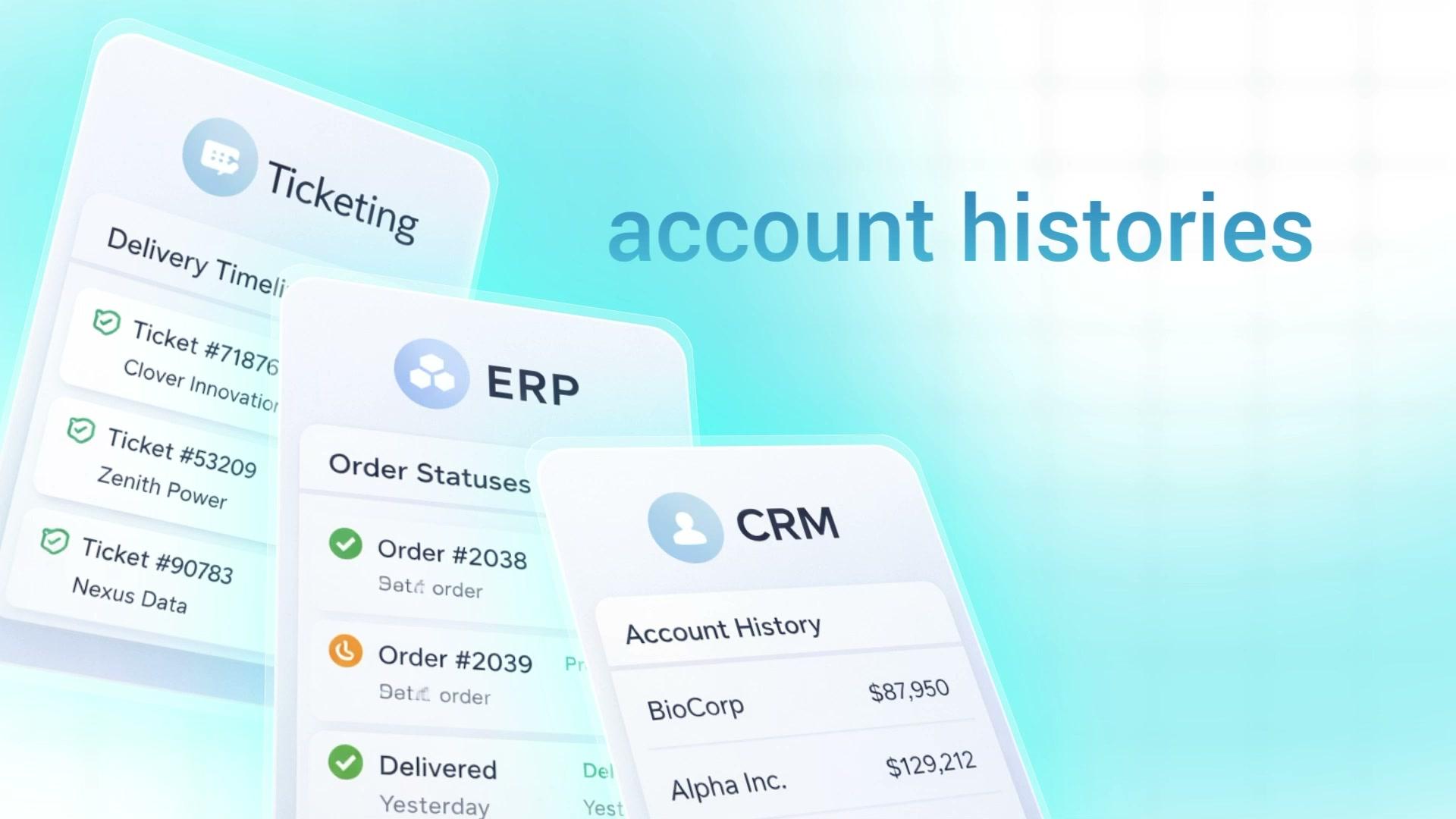
FDM's Krista.ai email explainer uses familiar inbox and system cards to make a workflow visible. That is relevant visual proof of an explanation approach. It is not evidence that custom animation always converts better, or that the film was produced using a particular AI tool.
Compare the cost of an approved video, not the first render
Include writing, product checks, design, narration, corrections, captions and future updates in the comparison. A low tool fee does not include your product manager's review time. Equally, an agency quote does not automatically include every language, source file or later product update.
Ask who will resolve inaccurate outputs and what files you receive. Before uploading a private product recording to any service, confirm that its data handling fits your company's requirements. Check the applicable usage terms for generated media and voices. Those terms differ by provider and plan; this article is not a licence clearance.
Explainify's published comparison makes the broader case for custom production on complex products. Our practical addition is to test one difficult sequence and one revision before buying the full scope. That makes the decision specific to your material rather than a general argument for hiring an agency.
Sources: Explainify: AI explainer video tools vs custom animation agency
When should you choose each approach?
Use an internal or AI-assisted draft when the stakes are low, the facts are already settled and someone can own corrections. Use a real screen recording when the click path is the product. Consider a custom or hybrid production when your buyer needs a visual model of something the interface cannot show, or when reusable design and revision control are important.
Do not commission the full film if the message is still unresolved. First write the one question the viewer should be able to answer afterwards. Then choose the smallest production approach that answers it accurately. A clear, maintainable film is a better purchase than a spectacular draft nobody can safely update.
Sources and references
- AI explainer video tools vs custom animation agency · Explainify · Checked 2026-09-18