What should you budget?
Published Indian studio prices vary substantially. As checked on 10 September 2026, MotionCube advertises a starting price of ₹70,000 for a 60-second animated video with professional voiceover. Studio iQ describes approximately ₹1.5 lakh for a 60-second 2D explainer and ₹8 lakh or more for a premium, longer production with greater customisation. These are two providers’ published indications, not a market average, comparable quotes or FDM prices.
Use those figures to understand why “one minute of animation” is not a complete specification. A screen-led software explanation, a character-led story and a detailed medical sequence can have the same runtime but very different production requirements. Ask for a scoped estimate rather than assuming the lowest advertised starting price covers your reference film.
Sources: MotionCube: Published explainer starting priceStudio iQ: Explainer video pricing by scope
What changes the price of a 60-second explainer?
The first driver is what must be created. Editing supplied, usable footage is different from writing the story, designing every scene and animating it. A simple-looking custom sequence can still require substantial thinking and iteration. Conversely, existing approved illustrations or a clear screen recording may reduce the amount of new material needed.
The second driver is how the work must be delivered: languages, voiceover, captions, aspect ratios, short versions and source-file handover. The third is the approval arrangement and deadline. None of these should remain implicit until the final export. A low base quote with several excluded deliverables can become a more expensive project than a fuller quote.
- Script and research responsibility
- Number and complexity of original scenes
- Voiceover, music and usage scope
- Review rounds and what counts as a change
- Languages, formats and cutdowns
- Source files, handover and future updates
Compare the scope before comparing the total
Send the same brief to each shortlisted supplier. Ask them to identify what they will create, what you must provide and what sits outside the estimate. “Unlimited revisions” is not enough detail: does it include a changed product story after script approval, or only adjustments within the approved direction?
Illustrative example: Quote A includes one landscape master from an approved script. Quote B includes scripting, two vertical adaptations and a caption file. The headline totals cannot tell you which is better value until you decide whether those additions are needed. Do not pay for outputs you will not use, but do not discover missing essentials after choosing.
Why the type of explanation matters at FDM
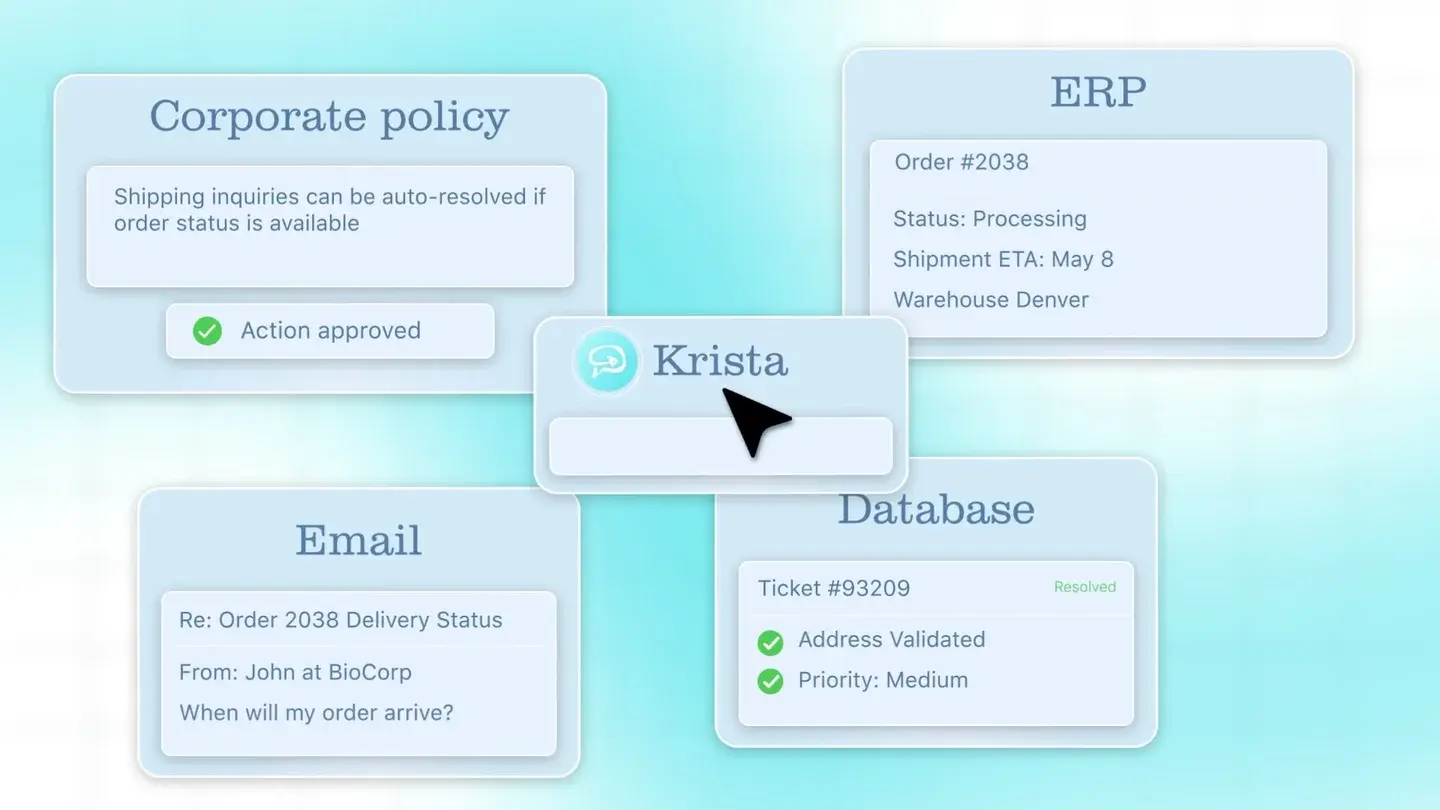
Our Krista.ai work combines a product story with interface-led visual explanation. Mega We Care’s health education requires a different relationship between expert meaning, narration and visuals. AssetPlus’s 100-video education library introduces consistency and repeatability across a larger scope. These are examples of different production jobs, not interchangeable minutes.
For a series, ask which parts can be shared and which must be created again. A common opening, type system or graphic treatment may be reusable. A new lesson still needs editorial decisions and review. Dividing the first film’s price by the number of later episodes is not a reliable budget model.
Sources: FDM: Krista.ai product explainersFDM: AssetPlus education library
How can you reduce cost without weakening the explanation?
Reduce the number of ideas before reducing the time spent making them understandable. A focused film with a clear use case can need fewer scenes than a company overview that tries to cover every product. Supply usable brand files, approved product information and realistic demo data at the start.
Choose a visual approach you can afford to maintain. If the interface changes frequently, separate the stable product story from the detailed click-path tutorial. Ask whether a screen-led film with selective motion graphics would answer the buyer’s question as well as a fully illustrated production. The more expensive format is not automatically the more useful one.
What should you send to get a useful quote?
Send the intended audience, where the film will appear, the one action or understanding it should produce, approximate runtime and deadline. Add two references and explain exactly what you like about each: pacing, interface treatment, illustration or voice. Include existing assets and the versions you need.
Ask the supplier to state whether applicable taxes, licences, voiceover usage, revision rounds and delivery formats are included. Confirm the written scope before committing. FDM quotes against the actual brief; the external prices above are context, not a promise that we will match a particular package. A useful first conversation should make the production choices clearer, not merely produce a number.
Sources and references
- Published explainer starting price · MotionCube · Checked 2026-09-10
- Explainer video pricing by scope · Studio iQ · Checked 2026-09-10
- Krista.ai product explainers · FDM · Checked 2026-09-10
- AssetPlus education library · FDM · Checked 2026-09-10