A useful brief transfers decisions, not adjectives
A video brief should tell the editor what the finished piece must help a specific viewer understand, believe or do. It should also show which decisions are already fixed and which ones the editor is expected to make. A list of topics, a brand deck and the instruction to make it premium are inputs, but they are not yet a usable brief.
At FDM, the brief is a decision document rather than a creative performance. It can be short. The useful test is whether another person can choose what to include, what to remove and what to emphasize without reconstructing the business context through a week of messages.
Start with the viewer's job
Name one primary viewer and the situation in which the video reaches them. A software buyer scanning a homepage has a different question from a signed customer learning a workflow. A doctor speaking to peers requires a different level of assumed knowledge from a public education piece. The same source material cannot serve every context equally well.
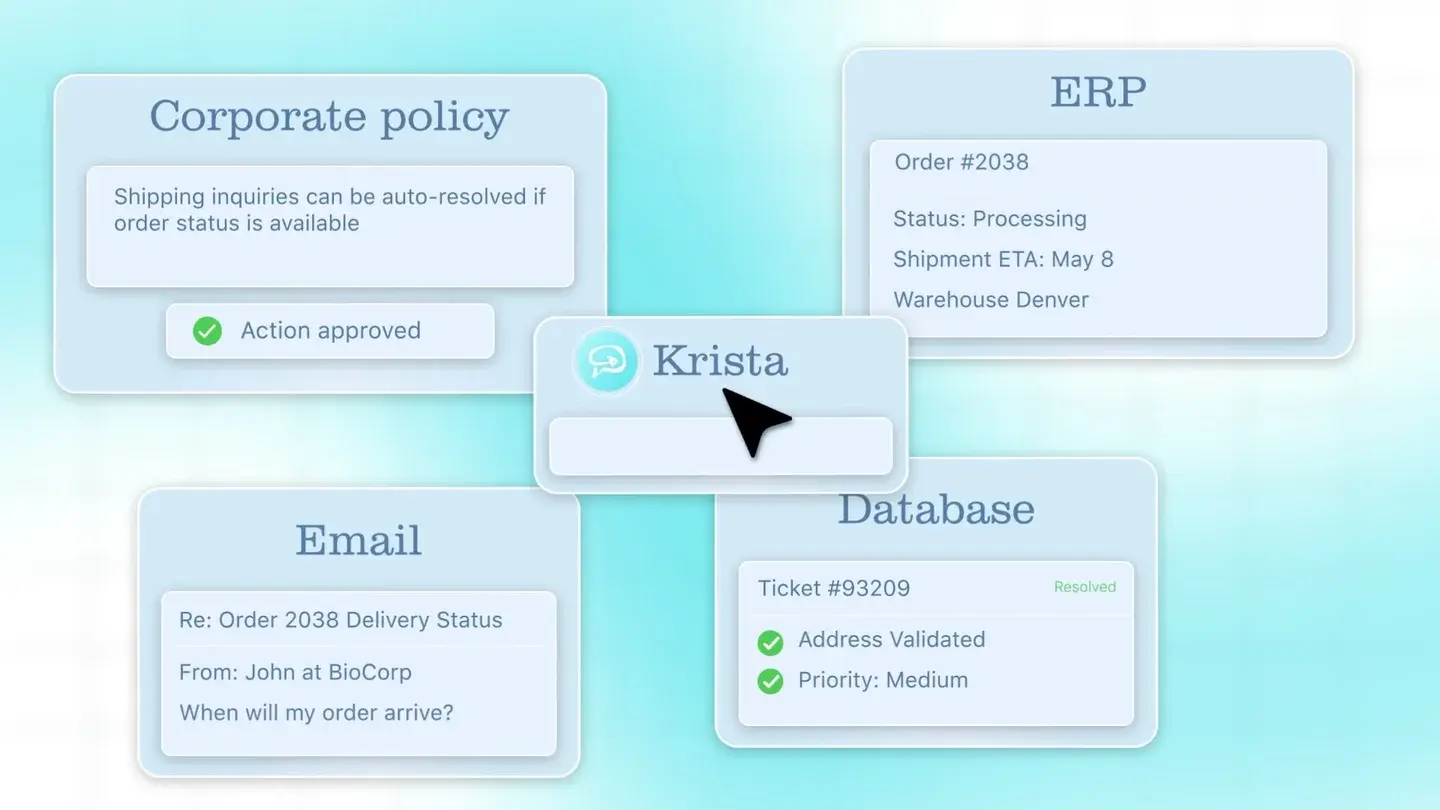
Then write one sentence describing the change the video should create. For example: a product leader should see how Krista.ai connects a human request to an automated workflow. That sentence helps an editor judge whether a screen, line or motion sequence earns its place.
- Primary viewer and what they already know
- Where the video will live
- The one belief or action it should create
- What the video does not need to explain
Separate source material from instructions
A demo recording, interview, webinar or podcast is evidence to work from. It is not automatically the structure. Tell the editor which claims, product moments and expert explanations are non-negotiable, and which areas may be condensed or reordered. This protects accuracy while leaving space for editorial judgment.
List genuine constraints separately: aspect ratios, captions, brand requirements, launch date, permitted footage and anything that cannot be shown. References are useful only when you say what you want to borrow from them. Pacing, restraint, typography and narrative shape are different decisions.
Put the approval path inside the brief
The brief should name the decision owner and the specialist reviewers. Product, medical, compliance or brand reviewers can protect specific parts of the work, but one person must resolve contradictions and approve each stage. Without that owner, the first cut becomes a meeting where every unresolved priority appears as a timestamped comment.
Define the review stages and what approval closes. Script approval closes the core message and order. Storyboard or edit-map approval closes the visual plan. An early cut tests pacing and assembly. If an approved script can be rewritten during finishing without a new scope decision, the process has stages only in name.
A one-page brief can be enough
Do not make the document long to make it look strategic. Link to source files, identify the decision owner and write the essential choices in plain English. If the team cannot agree on audience, objective or approver, that uncertainty is the work to resolve before editing begins.
FDM often starts with rough material rather than a polished brief. The difference is that we surface the missing decisions before full production. A useful partner should tell you what is unclear, not quietly turn ambiguity into extra revision rounds.